When 4 Screens Became 1: How TBN Built a Low-Code Contact Center for KTC Thailand
KTC (Krungthai Card) is one of the most referenced Low-Code Contact Center Thailand implementations in Thai financial services — and a clear example of what is possible when the right platform meets the right partner. KTC manages over 3.3 million credit card and personal loan accounts. Their Contact Center handles over 20,000 calls and 9,000 new cases per day — 24 hours a day. However, the existing system was placing more burden on agents than it should have.
Key results from this project:
Over 30% reduction in handling time
250 custom APIs developed
20,000+ calls supported per day
450 active users supported 24/7
The Problem: A Low-Code Contact Center System Not Designed for People
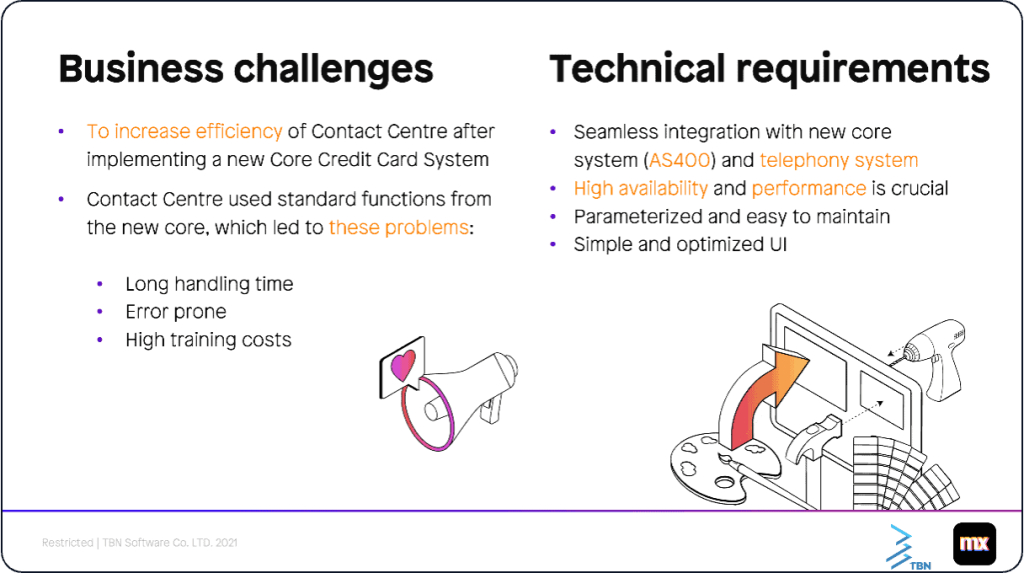
In 2015, KTC migrated their core system to an AS400 Core Credit Card System. The new system stored comprehensive customer and account data — however, that data did not flow automatically into the Contact Center.
Consequently, agents had to switch between screens to find information, then record
it on paper before processing. When a customer called to request a financial adjustment, the agent had to open 4 menus across 4 screens and submit the case for approval twice —for a single transaction.
As a result, handling times were long, customer satisfaction was low, training costs were high, and new agent onboarding took increasingly longer.
Furthermore, KTC operates in a heavily regulated industry where rules can change at any time. Therefore, their system needed to accommodate those changes immediately — without rewriting
thousands of lines of code.
Why KTC Chose Low-Code and TBN
TBN began by deeply understanding KTC’s actual working processes before designing any solution. In other words, rather than forcing technology into existing processes, TBN designed a new system that matched the way KTC’s team already knew work should be done.
From 4 Screens to 1: What TBN Built
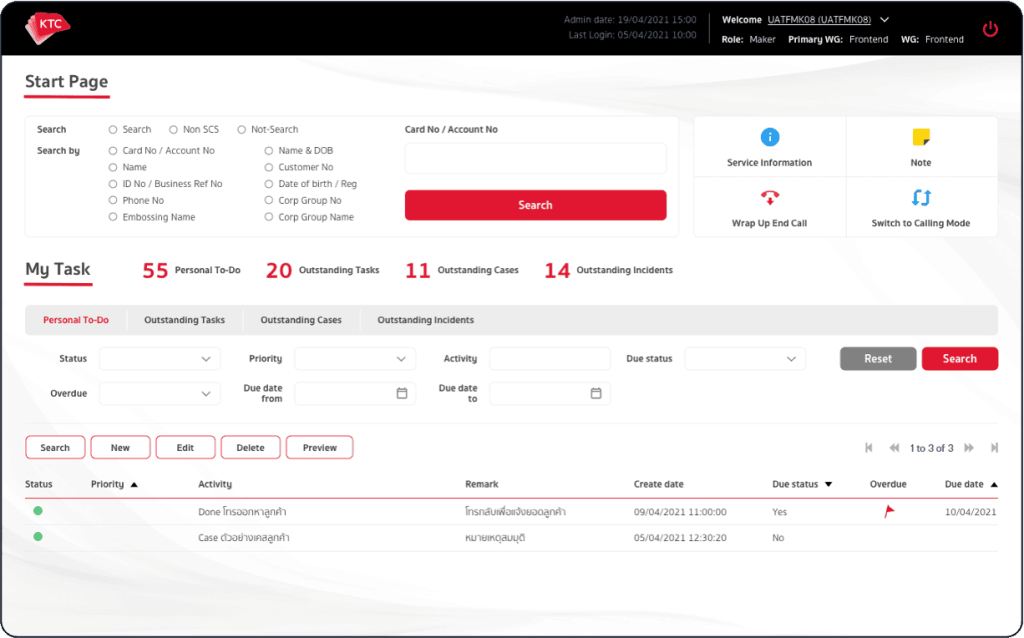
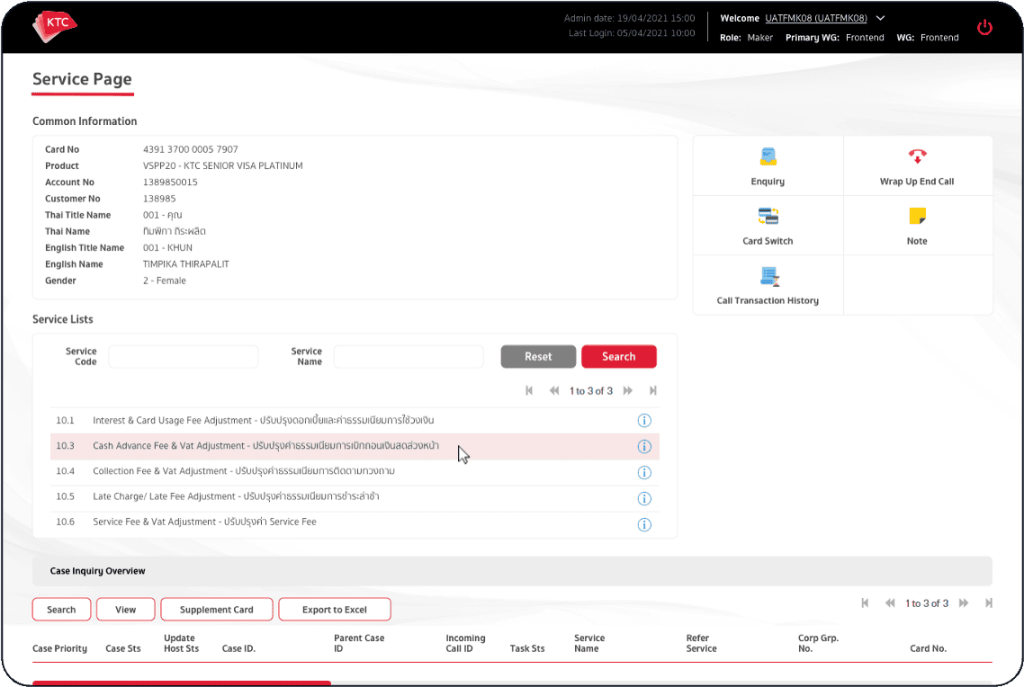
TBN designed a new interface divided into three panes on a single screen.
First: Case Information Displays the case creation date, issue type, and current status.
Next: 360-Degree Customer View Pulls all customer data from the AS400 system through a Mendix-built adapter —giving agents a complete view of the customer’s history in one place.
Finally: Dynamic Case Pane Automatically adjusts based on the case type. For example, if a customer calls to increase their credit limit, the relevant form and workflow steps appear automatically — without any screen switching.
TBN developed 250 custom APIs to connect the AS400 system with the Contact Center —ensuring data flows quickly, reliably, and accurately. Furthermore, by using TCP/IP Protocol converted to Web Service Protocol, each adapter can be scaled independently from the application layer.
As a result, when regulations change, the team can update individual adapters without affecting the rest of the system.
Results After Go-Live
The Low-Code Contact Center Thailand system has been running for over five years. The results are clear: over 30% reduction in handling time, significantly fewer manual errors, and KTC management now has access to real-time data to support strategic decision making.
In addition, TBN has continued to partner with KTC to deliver several other mission-critical systems since this first implementation.
"KTC was very pleased with the result because this system really helped a lot, both on the customer experience and also the internal operation process,"
Lessons for Thai Organisations Considering a Low-Code Contact Center Thailand Solution
The KTC case study shows that Contact Center problems in large organisations are ra rely about lacking technology. Instead, they are about existing systemsnot being designed for the way people actually work.
Frequently Asked Questions
Q: What problem did TBN solve for KTC?
A: TBN used Mendix Low-Code to build a new Contact Center system for KTC —consolidating 4 screens into one unified interface and developing 250 custom APIs to connect the AS400 core system.
As a result, handling time was reduced by over 30%.
Q: How long has the system been running?
A: The system has been in production for over five years — supporting 20,000+ calls per day, 24 hours a day, without interruption.
Q: Can other organisations apply
this approach?
A: Yes — particularly organisations with legacy systems that need to connect
with newer applications without a full rebuild.
Contact TBN to discuss your specific organisational requirements.